
Bespoke Manufacturing


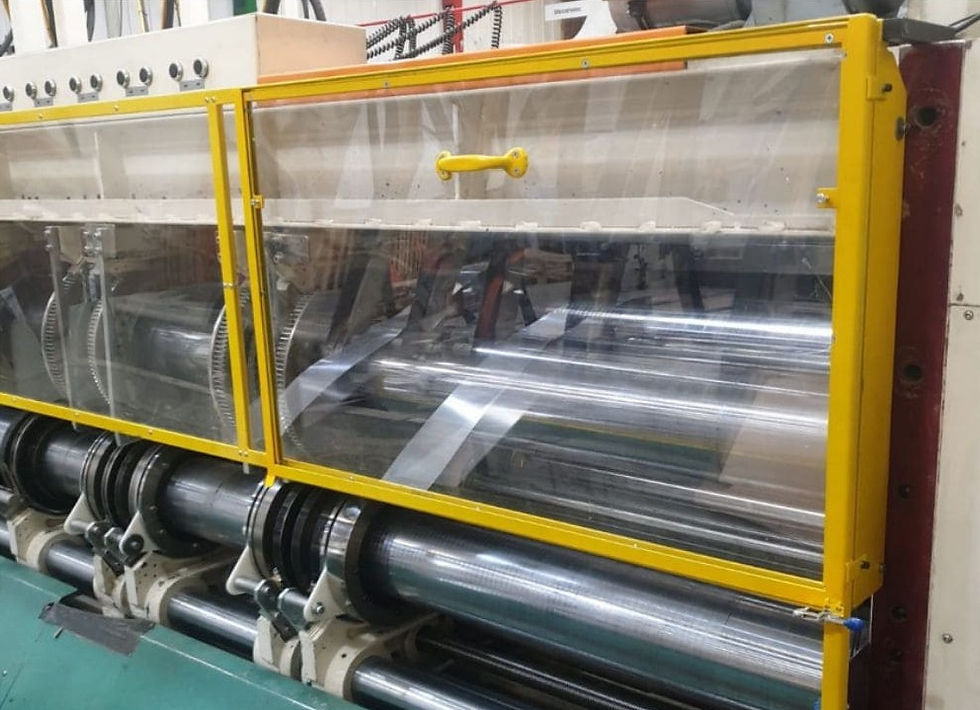


Bespoke Manufacturing in Yorkshire & Surrounding Regions
We provide a comprehensive range of custom design and manufacturing services specifically designed to fulfil your unique requirements, encompassing product specifications, dimensions, materials, and safety and compliance standards.
Our team excels in creating tailored products and solutions, pushing the boundaries of current designs and concepts to develop innovative products and ideas.
Should you have a project where identifying the appropriate product or solution proves to be difficult, we encourage you to give us a go.

Key Benefits of Bespoke Manufacturing
Quality Assurance and Durability: In-house design and manufacturing, frequently adhering to ISO 9001:2015 standards, result in enhanced quality, fewer defects, and extended product lifespans.
Customised Efficiency and Accuracy: Products are manufactured to precise specifications (materials, dimensions), guaranteeing exceptional functionality and adherence to industry standards.
Long-Term Cost-Effectiveness: Although the initial expenses might be elevated, customised and robust peoducts lead to decreased maintenance, fewer replacements, and minimised downtime.
Sustainability and Waste Reduction: Tailored, optimised designs reduce raw material waste and enhance energy efficiency, thereby promoting environmentally friendly manufacturing objectives.
Brand Differentiation: Tailored, high-accuracy products can be customised with logos, branding, or particular aesthetics to improve market positioning.
Supply Chain Efficiency: Local manufacturing shortens shipping durations and mitigates risks, facilitating improved communication and quicker turnaround times.
Benefits of Bespoke Industrial Manufacturing
Bespoke manufacturing delivers precision-engineered solutions tailored to specific performance and operational requirements, rather than mass-produced alternatives. Key benefits include: Precision Design – Components are engineered to exact specifications and tight tolerances. Optimised Performance – Products are built for their specific operating environment. Greater Flexibility – Supports innovation in materials, geometry, and production methods. Reduced Waste – Minimises overproduction, excess inventory, and material waste. System Integration – Ensures seamless compatibility with existing equipment and infrastructure. Long-Term Efficiency – Improves reliability, lifespan, and operational performance. Competitive Advantage – Enables unique, high-performance solutions not available off the shelf. Typical Applications: Bespoke manufacturing is widely used in: Aerospace engineering Automotive and motorsport industries Medical devices and healthcare equipment Energy and power generation systems Advanced engineering and precision components Industrial machinery and tooling Research and development projects Custom production systems and prototypes Process: Consultation – Define requirements, performance goals, and technical constraints. Design & Engineering – Develop detailed CAD models and technical specifications. Prototyping – Produce and test initial samples where required. Manufacture – Fabricate components using appropriate advanced manufacturing methods. Quality Assurance & Delivery – Inspect, verify, and deliver fully finished components ready for integration. FAQs: What is bespoke manufacturing? It is the production of custom-designed components or products tailored to specific functional and technical requirements rather than mass production. What industries use bespoke manufacturing? It is commonly used in aerospace, automotive, medical, energy, and advanced engineering sectors. Why choose bespoke over standard manufacturing? It offers improved performance, precision, system compatibility, and long-term efficiency where standard products may not be suitable. Does bespoke manufacturing reduce waste? Yes. It produces only what is required, reducing excess material usage, inventory, and waste. Is bespoke manufacturing cost-effective? While initial costs may be higher, it often delivers long-term savings through improved durability, efficiency, and reduced downtime.